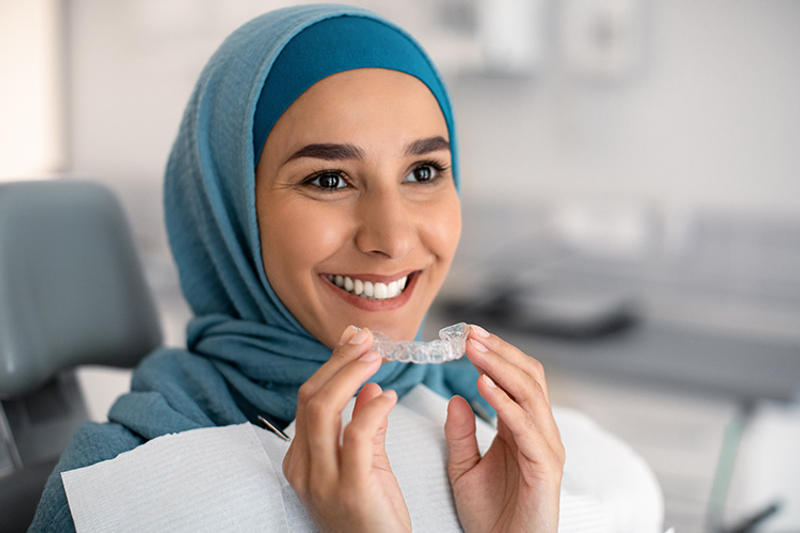
It’s an exciting time when you finish orthodontic treatment. You’ve worn braces or clear aligners for months, and now you get to enjoy a straighter, healthier smile. But the process doesn’t end the moment your braces come off or your aligner trays run out.
You still need to hold your teeth in their new positions, and that’s what retainers are for.
Your teeth, gums, jawbone, and surrounding tissue all need time to settle after treatment. Without a retainer, your teeth can drift back toward their old positions. That’s what makes wearing one so important.
What Is a Retainer?
A retainer is a custom dental appliance designed to keep your teeth in place after orthodontic treatment. It’s built to fit your mouth and the final position of your teeth, and it can be either removable or fixed in place.
Retainers aren’t the same as braces. They’re not meant to move your teeth into new positions. Instead, they hold your teeth steady once treatment has moved them where they need to be.
Types of Retainers
There are three main types of retainers.
Clear retainers
These are thin, clear trays that fit over your teeth. They’re removable and easy to wear.
Hawley retainers
These are acrylic-based with a metal wire across the front teeth. They’re durable, adjustable, and removable.
Fixed retainers
These are thin wires bonded behind the teeth, usually on the lower front teeth. They stay in place all the time and prevent the teeth from shifting.
Your orthodontist will determine which type is the best fit for your treatment, your bite, and your needs.
Why Do Teeth Move After Braces Come Off?
Small fibers around the roots, gums, and bone hold your teeth in place. Braces and aligners stretch and change those tissues as they move your teeth, and that tissue needs time to settle once treatment ends.
Your bite can also shift over time due to natural aging, bite pressure, tongue habits, tooth grinding, missing teeth, or other bite changes. That’s exactly where retainers come in.
Advantages of Wearing Retainers
- Keeps your teeth in place after braces or aligners
- Protects the time, effort, and money you invested in treatment
- Lowers the chances of crowding coming back
- Helps maintain a comfortable bite
- Supports a balanced, confident smile
- Can prevent the need for future re-treatment
What Happens If You Don’t Wear Your Retainers?
Your teeth can start to shift when you skip retainer wear. At first, the movement is usually minor. You might notice your retainer feels tight the next time you put it in. Over time, spaces, crowding, or bite changes can follow.
How Long Should You Wear Retainers?
Your orthodontist will give you a personalized wearing schedule. Most patients wear their retainer full time at first, then switch to nightly wear. Depending on your case, you may need long-term nighttime wear to keep your teeth stable for good.
The exact schedule depends on your age, how your teeth respond, your bite, and your treatment outcome. Don’t stop wearing your retainer unless your orthodontist tells you to. For many patients, retainer wear becomes a lifetime habit, and it eventually feels as easy as sleeping.
Tips to Care for Your Retainers
- Store removable retainers in their case when you’re not wearing them
- Keep retainers away from pets, heat, napkins, or pockets
- Don’t eat while wearing removable retainers unless your orthodontist says it’s okay
- Bring your retainer to every orthodontic visit
- Contact your orthodontist if your retainer feels uncomfortable, bends, or cracks
- Never force a tight retainer into place. It can damage the appliance or hurt your teeth
Retainer Cleaning Tips
Clean your retainer every day. Use a soft toothbrush and a mild soap or cleaner your orthodontist recommends. Skip hot water, since it can warp the shape of some retainers.
Brush carefully around the wire, and floss according to your orthodontist’s directions if you have a fixed retainer. Floss threaders or small interdental brushes make it easier to keep that area clean.
Common Mistakes to Avoid with Retainers
Most retainer problems come down to a few simple habits. Don’t wrap your retainer in a tissue, since it’s easy to accidentally throw away. Never leave it in a hot car or near boiling water, and avoid strong cleaners unless your orthodontist gives the okay.
Another common mistake is only wearing your retainer when your teeth start to feel like they’re shifting. Consistent wear, not occasional wear, is what actually keeps your smile in place.
When to See Your Orthodontist
Contact our office for a replacement if your retainer is broken, lost, too tight, or loose. It’s also worth scheduling a visit if you notice tooth movement, bite changes, gum irritation, or damage to a fixed retainer.
Catching small problems early helps you avoid bigger ones down the road.
Locations We Serve
We proudly provide orthodontic treatment for patients of all ages in:
- Westlake, OH
- Norwalk, OH
- Avon, OH
- Rocky River, OH
- North Olmsted, OH
Final Thoughts
After your orthodontic treatment, your retainer becomes the most important factor in maintaining your beautiful smile. Braces and aligners do the work of moving your teeth, and your retainer holds that change in place. Wear it as prescribed, take good care of it, and you’ll enjoy the benefits for years to come. A few minutes of care each day can save you months or years of future orthodontic treatment. If you ever have questions about your retainer, don’t hesitate to ask your orthodontist.